Homepage

Datasheets

Catalog Selector Guides

Presentations

About Tibbo

Products

Programmable Logic Controllers - The Tibbo Way
Programmable logic controllers and microcontrollers are ubiquitous, but it's difficult to create network-enabled applications for them: they require complex libraries, etc.
Linux is feature-rich, but heavy and may be an overkill for your project. Plus, programming can still be time-consuming and debugging tools are often primitive.


Tibbo's programmable offering fills the gap! It is all about letting you build network-enabled automation products and systems economically and fast.
Content

TibboProject System - TPS


The Tibbo Project System (TPS) is a highly configurable and affordable automation platform.
Configure your own modular programmable Ethernet & I/O controller.

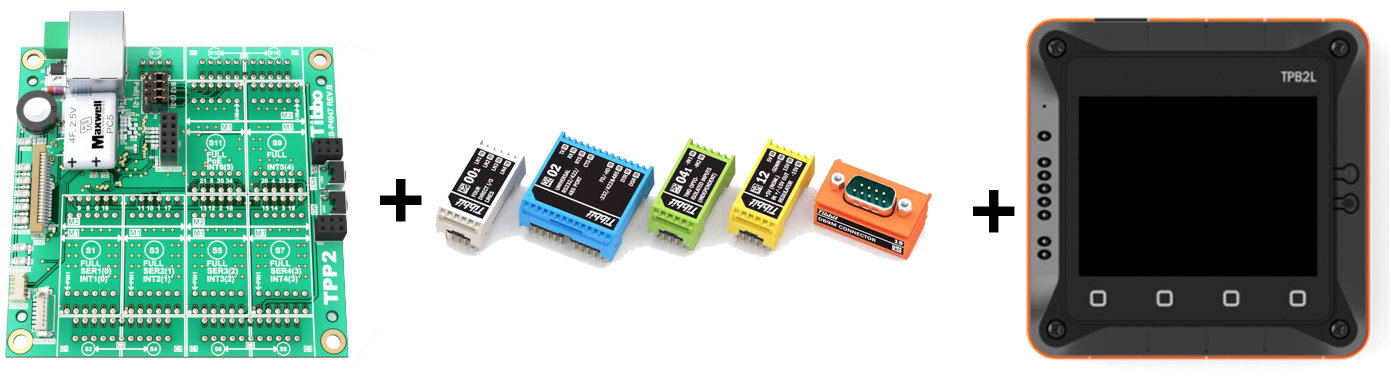
Tibbo Project System = Project PCBs + Tibbits + Project Box


The base is the Tibbo Project PCB (TPP) containing the Tibbo BASIC programable CPU with ethernet port and a very basic power supply.
All the I/O functionality including the advanced power supply can be choosen by selecting Tibbit function modules.
Together with the additional Tibbo Project Box (TPB) the solution becomes a proper control equipment.


TPS Product Presentation (Deutsch)


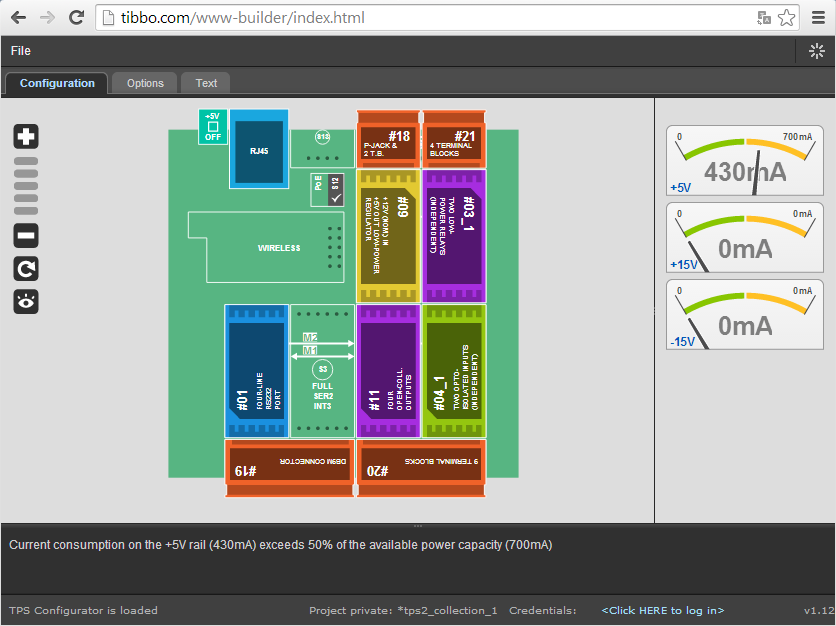
Online configuration tool:
http://tibbo.com/www-builder/index.html


Content

Tibbo Project PCB - TPP

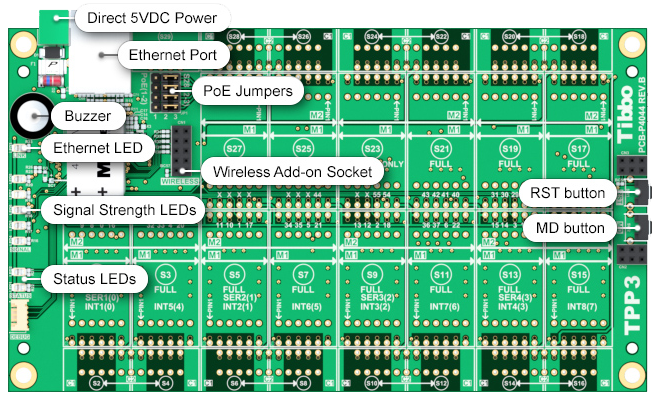
A TPP is programmable in Tibbo BASIC and carries the T1000 CPU, Ethernet port, flash, and the EEPROM.

Each TPP offers a number of installation sockets for Tibbits. Plug in desired Tibbits, put the assembly into an optional Tibbo Project Box, and you've got yourself a cost-effective, highly customized automation device that carries no unwanted excess.

To achieve economical basic unit price, TPPs keep the onboard circuitry to the necessary minimum. For example, there is no built-in power supply -- the boards directly accept only regulated +5V power. Real-world power processing (from 12V, PoE, etc.) is achieved by adding power supply Tibbits. This "no excess" approach is the cornerstone of the Tibbo Project System.

Two different boards are available.
        
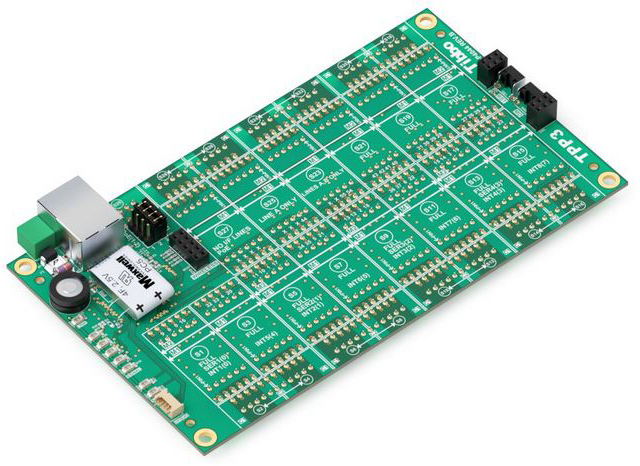
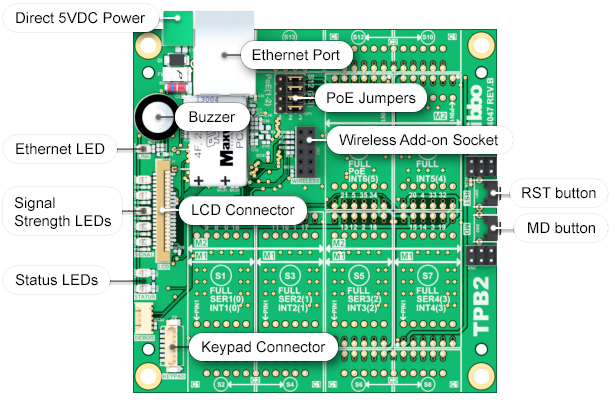
                           TTP2                                                                 TTP3

Content

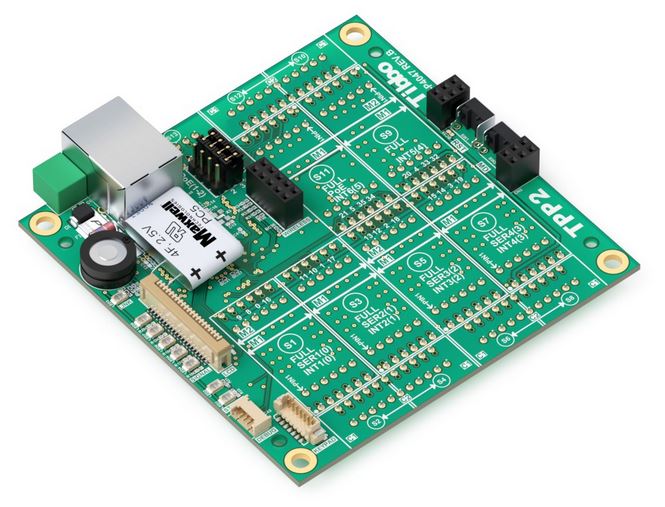
Size 2 Tibbo Project PCB (TPP2)

Size 2 Tibbo Project PCB is perfect for systems with a medium number of I/O lines. Since the board can control a TFT display and a keypad, it is suitable for applications requiring a human-machine interface (HMI).
This product can be used as a bare board or assembled into a size 2 Tibbo Project Box. For HMI applications, the board can also be assembled into the TPB2L box, which features a 320x240 TFT LCD and a 4-button sensor keypad.


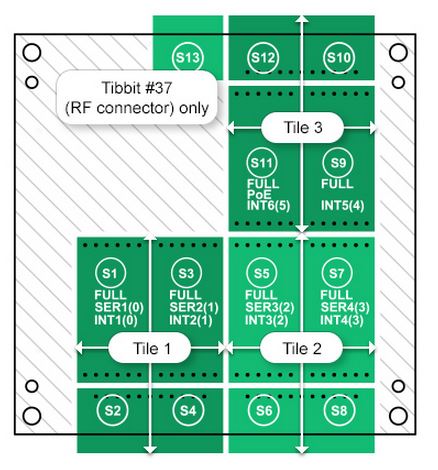
Offering 3 tiles for a total of 6 "M" and 6 "C" sockets, the TPP2 can implement configurations with up to four simple serial ports, up to 12 relays, or up to 24 opto-inputs, PWM, and open-collector outputs.


The TPP2 is perfect for data collection and AutoID projects, as well as factory, shop, data center, hotel, and home automation applications. The board contains enough "C" sockets to simultaneously accommodate temperature, humidity, pressure, ambient light, and shock sensors. With the use of appropriate Tibbits the board can even control legacy IR devices by emulating traditional IR remote controls.

Content

Size 3 Tibbo Project PCB (TPP3)

Size 3 Tibbo Project PCB is ideal for applications that require no human-machine interface (HMI) while calling for a significant number of I/O lines and/or functions.

The TPP3 board can be used to replace dumb PLC controllers or work as a safety, security, or access control device. The TPP3 is also ideal for factory, lab, shop, building, hotel, and home automation projects.


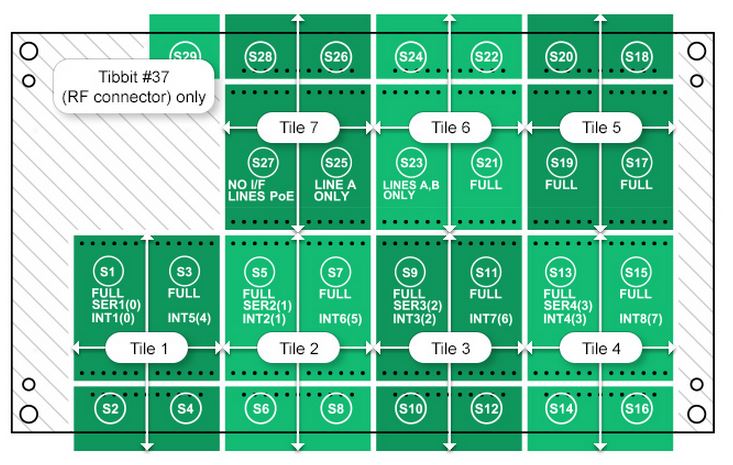
Offering 7 tiles for a total of 14 "M" and 14 "C" sockets, the TPP3 can be used to construct devices with up to four full serial ports, up to 25 relays, or up to 47 opto-inputs, PWM, and open-collector outputs.


Further, the generous number of available Tibbit sockets means you can increase your system's versatility by offering multiple power supply options, such as +5V, +12V, PoE, etc. You can also install multiple power supply Tibbits to increase total available power or provide power redundancy.

This product can be used as a bare board, or assembled into a size 3 Tibbo Project Box.
Content

Tibbits

Tibbits (as in "Tibbo Bits") are blocks of prepackaged I/O functionality, designed to simplify your testing, prototyping, product development, and integration.

Tibbits implement a wide variety of I/O functions. Want an ADC? There is a Tibbit for this. 5V power supply? Got that! RS232/422/485 port? We have this, and many other Tibbits, too.

Tibbits complement our programmable modules, and they can also be used with virtually all popular microcontrollers.

Tibbits are an integral part of our Tibbo Project System. They plug into Tibbo Project PCBs and fit into our Tibbo Project Box enclosures.

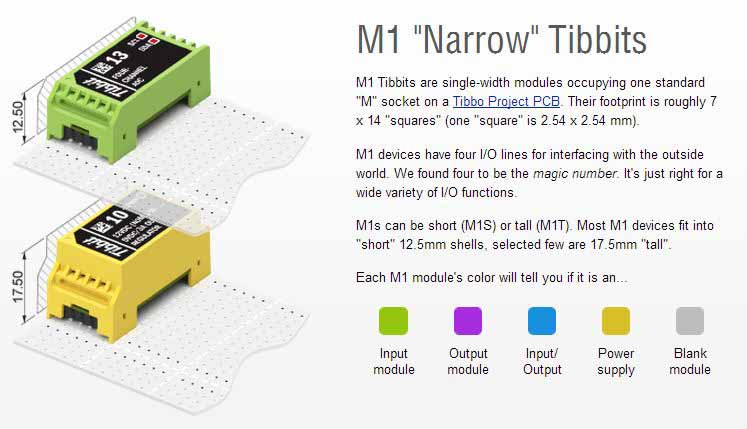
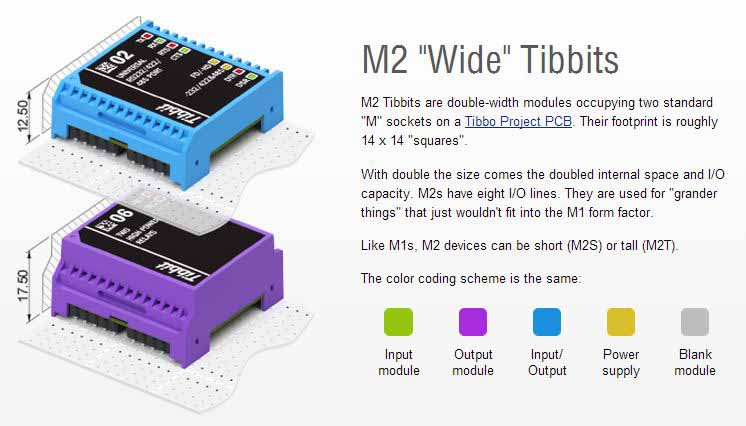
Tibbits are housed in color-coded rectangular shells. Their pins have a classic 2.54mm (0.1") pitch, so they can be installed on prototyping boards.

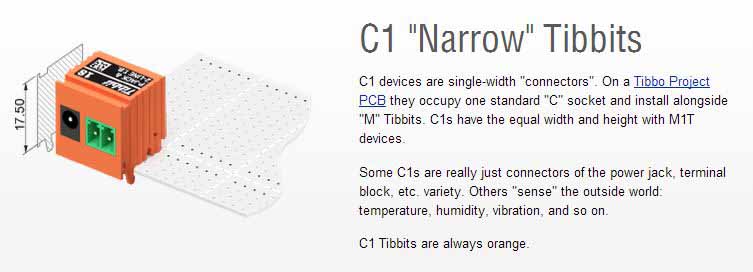
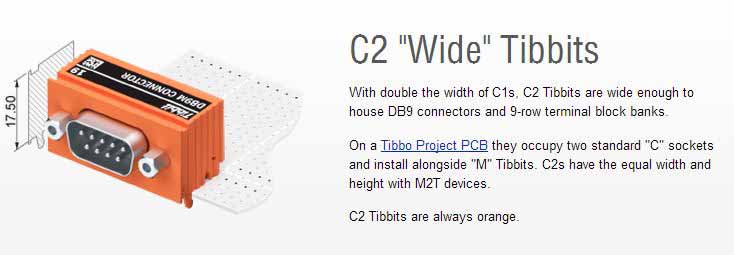
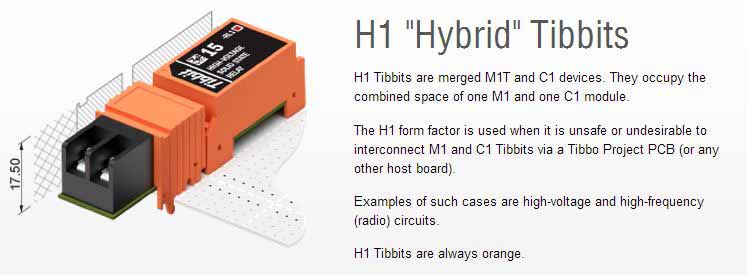
Tibbits are divided into Tibbit modules ("M" devices) and Tibbit connectors ("C" devices). There are also hybrid ("H") Tibbits that combine the two.

Tibbit connectors have convenient hooks that additionally secure them on the board's edge.


Available Tibbits

Available Tibbits Description
TIBBIT_00_1 Four direct I/O lines
TIBBIT_00_2 Three direct I/O lines and ground
TIBBIT_00_3 Two direct I/O lines, +5V power, ground
TIBBIT_01 Four-line RS232 port
TIBBIT_02 RS232/422/485 port
TIBBIT_03_1 Two low-power relays (configuration 1)
TIBBIT_03_2 Two low-power relays (configuration 2)
TIBBIT_04_1 Two isolated inputs
TIBBIT_04_2 Three isolated inputs, common (-)
TIBBIT_04_3 Three isolated inputs, common (+)
TIBBIT_04_4 Four opto-inputs, common ground
TIBBIT_05 RS485 port
TIBBIT_06 Two high-power relays
TIBBIT_07 Two solid state relays
TIBBIT_08 Wiegand and clock/data reader port
TIBBIT_09 Low-power 5V supply, 12V input
TIBBIT_10 Medium-power 5V supply, 12V input
TIBBIT_11 Four open collector outputs
TIBBIT_12 Low-power +15/-15V power supply, 5V input
TIBBIT_13 Four-channel ADC
TIBBIT_14 Four-channel DAC
TIBBIT_16 Three PWMs with open collector outputs
TIBBIT_17 Three PWMs with power outputs
TIBBIT_18 Power input (includes the terminal block plug)
TIBBIT_19 DB9M connector
TIBBIT_20 Nine terminal blocks (incl. plug)
TIBBIT_21 Four terminal blocks (incl. plug)
TIBBIT_23 Isolated PoE. Can be used as generic 48V power supply
TIBBIT_25 High-power 5V supply, 12/24/48V input
TIBBIT_28 Ambient light sensor
TIBBIT_29 Temperature meter
TIBBIT_30 Humidity and temperature meter
TIBBIT_31 PIC coprocessor (ADC, PWM, serial, and more…)
TIBBIT_35 Barometric pressure sensor
TIBBIT_36 3-axis accelerometer
TIBBIT_37 RF Antenna
TIBBIT_39_1 Low-brightness large green LED
TIBBIT_39_2 High-brightness large red LED
TIBBIT_39_3 Low-brightness large yellow LED
TIBBIT_39_4 High-brightness large blue LED
TIBBIT_40_1 Digital potentiometer, 5KOhm
TIBBIT_40_2 Digital potentiometer, 10KOhm
TIBBIT_40_3 Digital potentiometer, 50KOhm
TIBBIT_40_4 Digital potentiometer, 100KOhm
TIBBIT_41 8-bit port (supplied with 200mm cable)
TIBBIT_42 High precision RTC and NVRAM with battery backup
Content
Picture Description

Tibbo Project Box- TPB

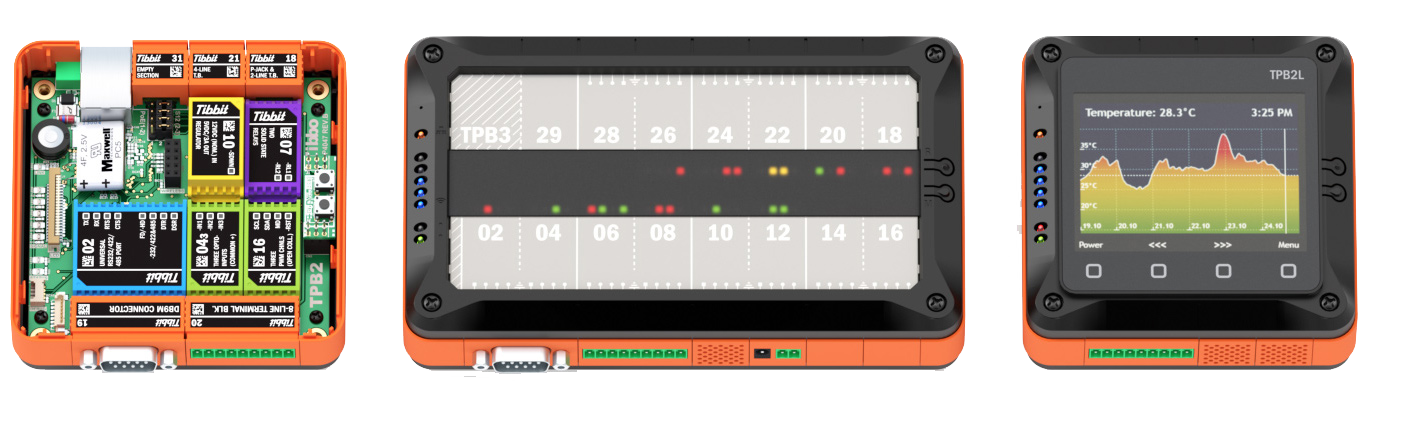
Most projects require an enclosure. Designing one is a tough job. Making it beautiful is even tougher, and may also be prohibitively expensive. Not to worry -- your Tibbo Project System can optionally be ordered with a Tibbo Project Box (TPB) kit.

Available in three versions, our Project Box kits include easy-to-assemble shells and necessary small parts (screws, etc.). Each Box can be ordered with the available DIN rail mounting as well as the vibration protection kit that will secure Tibbits in their sockets.

For a small fee we can even assemble your Project Box/System, or you can choose to assemble everything yourself.

TPB2: Size 2 Tibbo Project Box

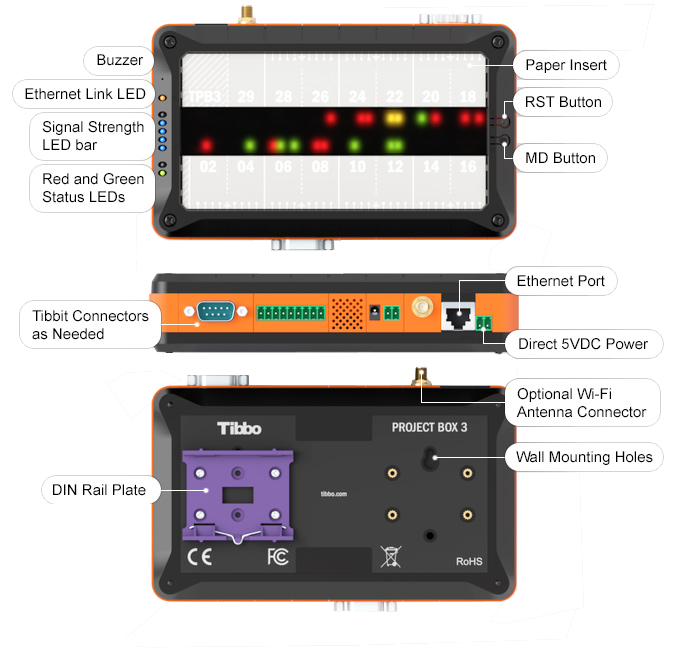
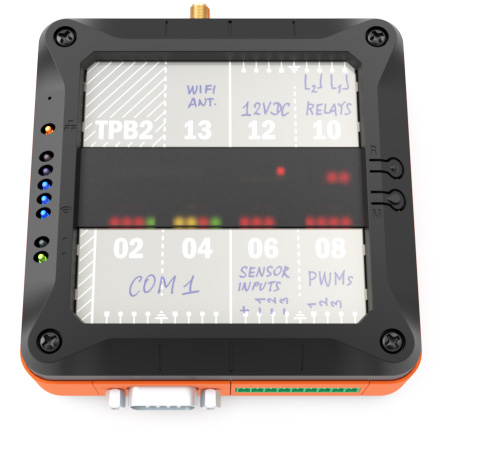
This Box fits size 2 Project PCB (TPP2) and can accommodate up to 6 "M" and 6 "C" Tibbits. The kit includes top and bottom covers, left and right side walls, status LED light guide, screws, DIN rail mounting kit, as well as paper inserts with transparent covers for marking wires and cables. Front and back walls of the Project Box are formed by rows of "C" Tibbits. Unassembled Project Box kits come with enough blank Tibbits (#31) to fill all the voids.

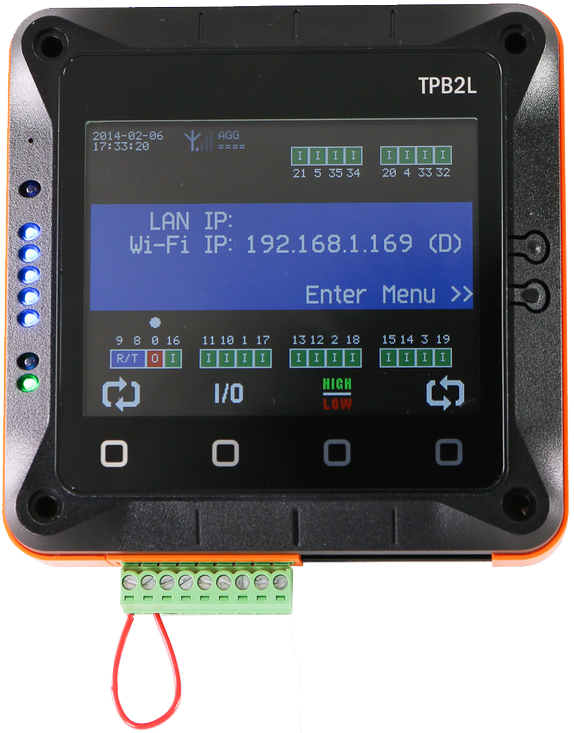
TPB2L: Size 2 Tibbo Project Box with LCD & Keys

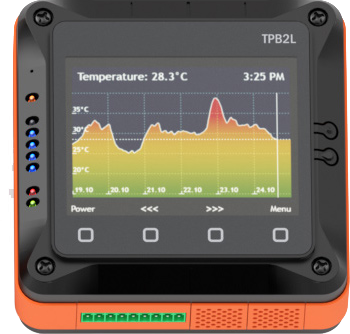
Like the TPB2, this Box is for the size 2 Project PCB (TPP2), except instead of the "regular" top cover with recesses for two paper inserts, the TPB2L incorporates a 320x240 3.5" TFT LCD and four sensor keys (both are included with the kit).

Use TPB2L for...
  • Home automation projects (HVAC, lighting, etc.)
  • Security systems (access control, alarm panels)
  • Production line automation devices
  • Data collectors
  • Projects requiring a human-machine interface (HMI)

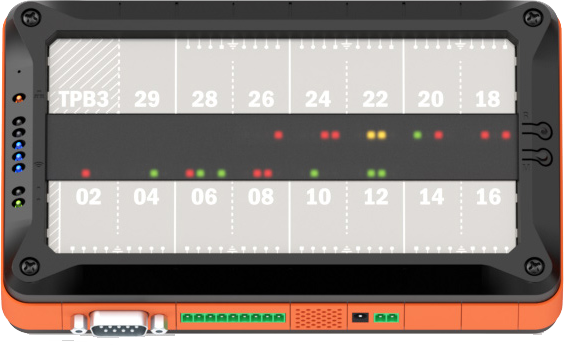
TPB3: Size 3 Tibbo Project Box


This Kit is designed for the size 3 Project PCB (TPP3) and accommodates up to 14 "M" and 14 "C" Tibbits. Size 3 systems have ample room for sophisticated applications requiring multiple I/O functions and/or a high volume of I/O lines.
Content

TPS Demo Application

The TPS Tibbo BASIC application is a great tool for testing Tibbo Project System devices. The application allows you to control the I/O lines and serial ports of TPP2 and TPP3 boards. A very simple set of hardware is minimally required for the
tests, yet the application itself is sufficient for working with various Tibbits such as relays, sensor inputs, and so on*.
The application is written to work with Ethernet and Wi-Fi interfaces , with plans to support GPRS communications in the near future.
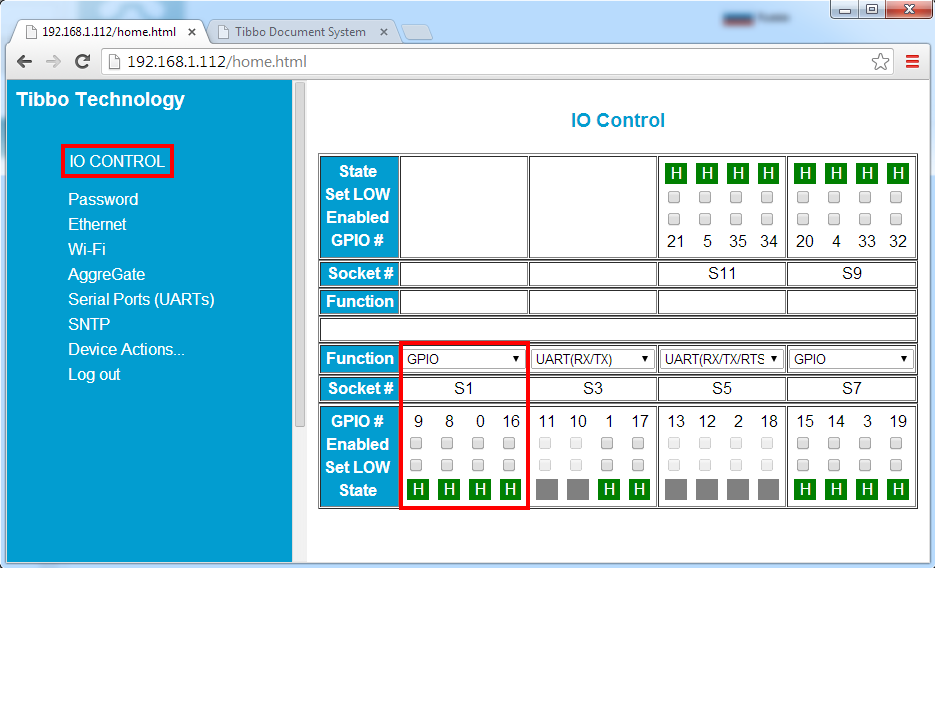
The application demonstrates how to control your TPS system via the DS Manager utility , through the web interface , and the AggreGate Server . The application also supports the LCD and keypad of TPS2L devices.

Before you delve into the actual configuration and use of your TPS device, we recommend that you take a look at the LED signals topic.


To test the TPS app you can either upload pre-compiled binaries which are available for all three TPS systems (TPS2, TPS2L, TPS3), or open the project in TIDE and compile it yourself .
Either way, the first time this application runs on your TPS device it will initialize a number of EEPROM settings. This will take some time at first boot, after which the device will reboot and start running normally. The first step you will need to take after that is configure the IP of the Ethernet port. DS Manager Utility topic explains how to do this.

  Manual: TPS Demo Application (English)
Content

Serial-to-Ethernet 

RS232 ports may have disappeared from your PC but serial interfaces continue to be widespread in many industries such as security, automation, and IT.
Tibbo's serial-over-IP solutions marry the simplicity of serial communications with TCP/IP networking of the Internet age.
We supply external device servers, embedded Ethernet modules, and PC software that allow you to quickly network-enable practically any serial device.


There are three basic ways to use Tibbo's Serial-over-IP devices. Each of the methods described below is fully supported by the Tibbo Device Server Toolkit software with its Connection Wizard — a scenario-based configuration helper that will have your Tibbo device server (board, module) up and running in no time at all.

Virtual Serial Ports
Our Virtual Serial Port Drivers for Windows and Linux allow you to transparently access your device server's serial port as if it was a real COM port of your PC. Your "serial" PC software won't notice the cheat.

Direct TCP and UDP links
All Tibbo serial-over-IP devices support standard TCP/IP and UDP/IP protocols. Open a socket and exchange data with the serial port of your device server directly. It's that simple.

Device-to-device links
Tibbo device servers can talk to each other directly, using standard TCP/IP and UDP/IP protocols. No PC necessary.

Common Features of the Serial-over-IP Devices
*This list is for reference only. Not all devices support all listed features.

Presentation: Tibbo Embedded LAN-Modules
Content

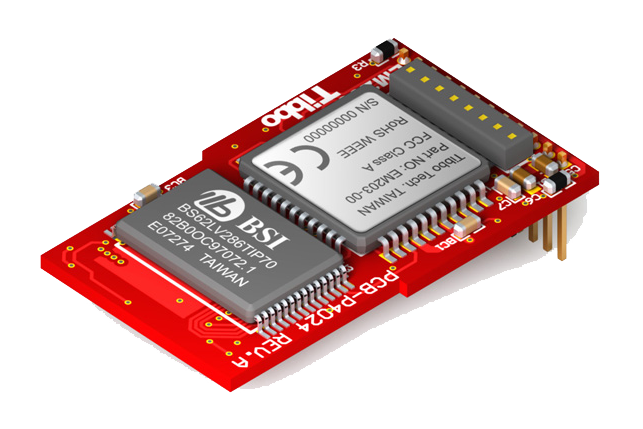
Serial-over-IP Embedded Module

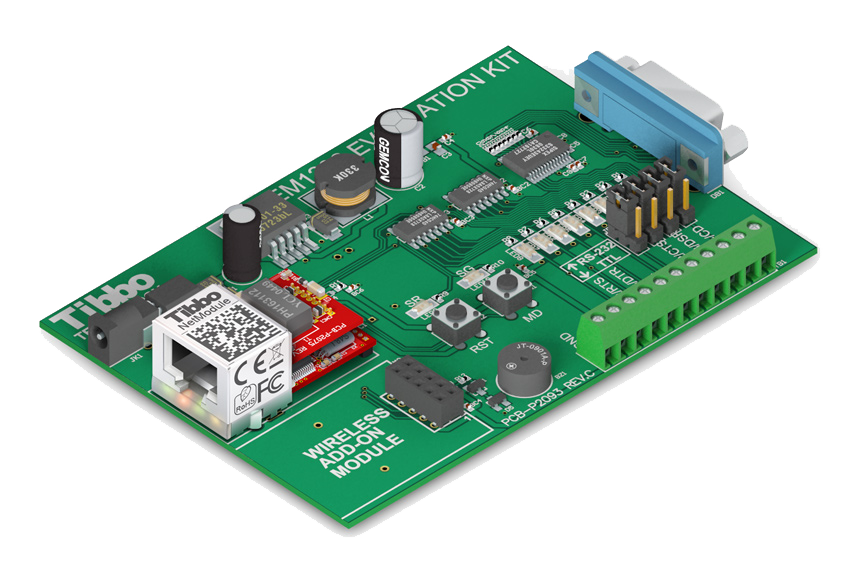
Don't want to use an external device server, but not quite ready for a full-blown development cycle with one of our Ethernet modules?
Use a serial-to-Ethernet board! Less external clutter, fast time to market.


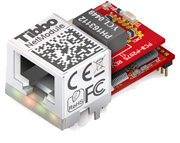
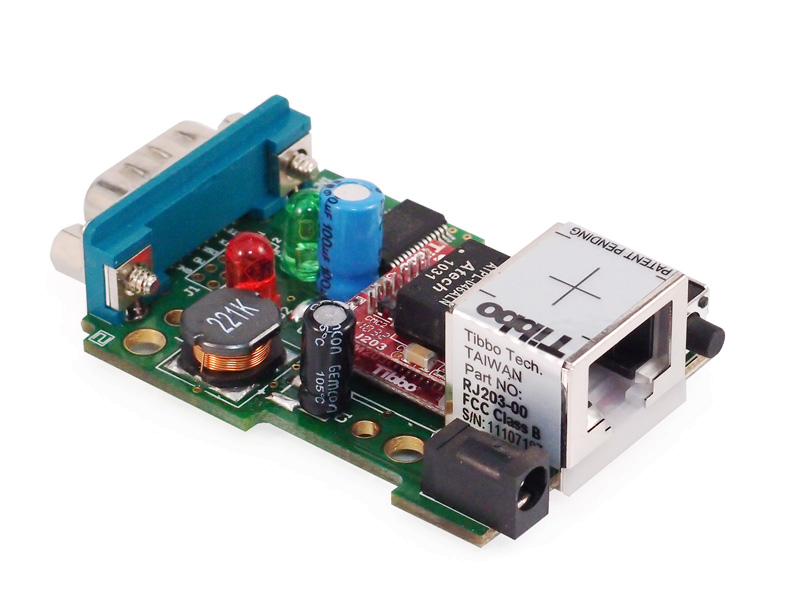
EM203

EM203+RJ203
P/N Serial
Interfaces
I/Os Flash
Disk
RTC Power
(100BaseT)
WiFi
support
LCD, Keybord & Buzzer support RJ203
support
LED Size
(mm)
EM203 1 - - - 220mA
5V
- - X 4 30,1
18,1
12,5
Content

Programmable Embedded Module

Tibbo's BASIC-programmable devices can be used as serial-over-IP products too.
Download and use the device server Tibbo BASIC application as-is or modify it to suit the needs of your product — full source code is freely available.

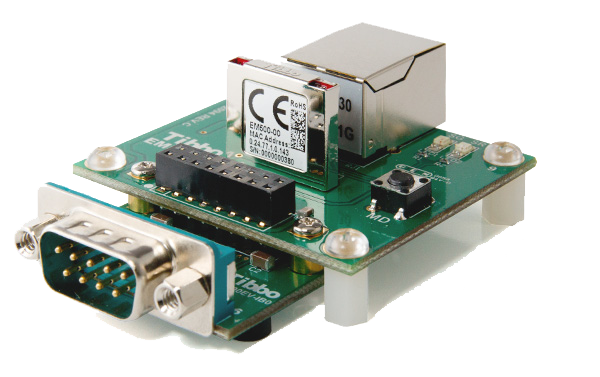
EM500

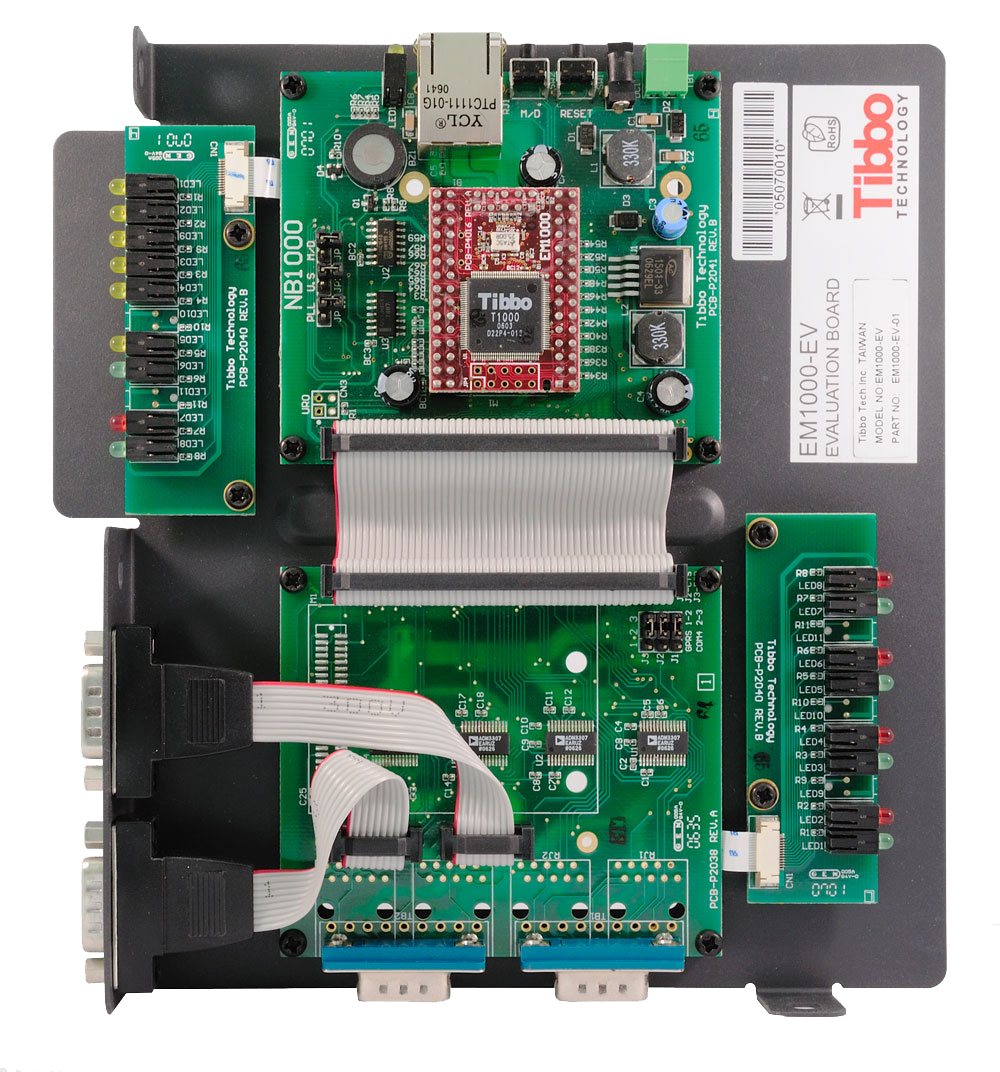
EM1000

EM1202

EM1206

EM1206+RJ203
P/N Serial
Interfaces
I/Os Flash
Disk
RTC Power
(100BaseT)
WiFi
support
LCD, Keybord & Buzzer support RJ203
support
LED Size
(mm)
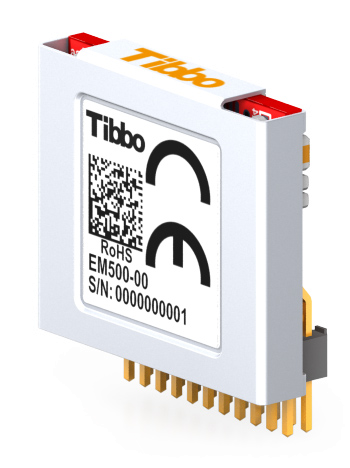
EM500 1 8 optional X 260mA
3,3V
X - - 2 18,5
16
6,5
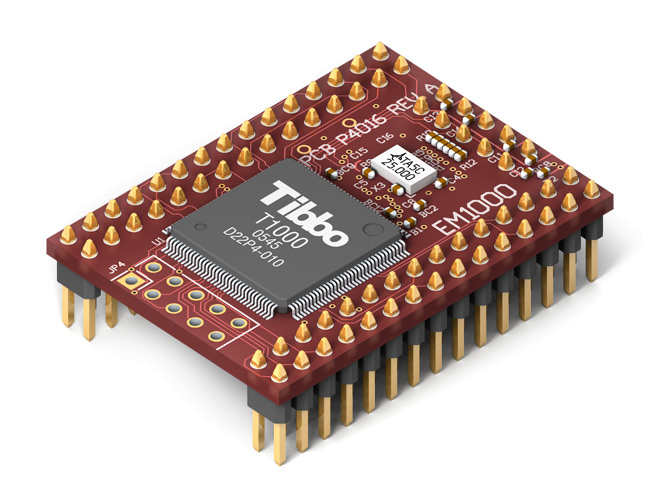
EM1000 4
high speed
53 X X 230mA
3,3V
X X - - 38,4
24,4
5,5
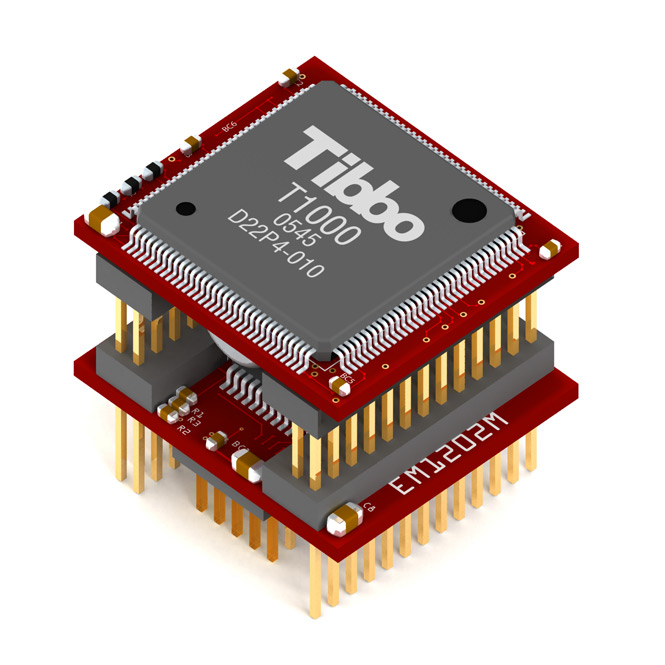
EM1202 4
high speed
32 X - 230mA
3,3V
X X - - 19
17
14
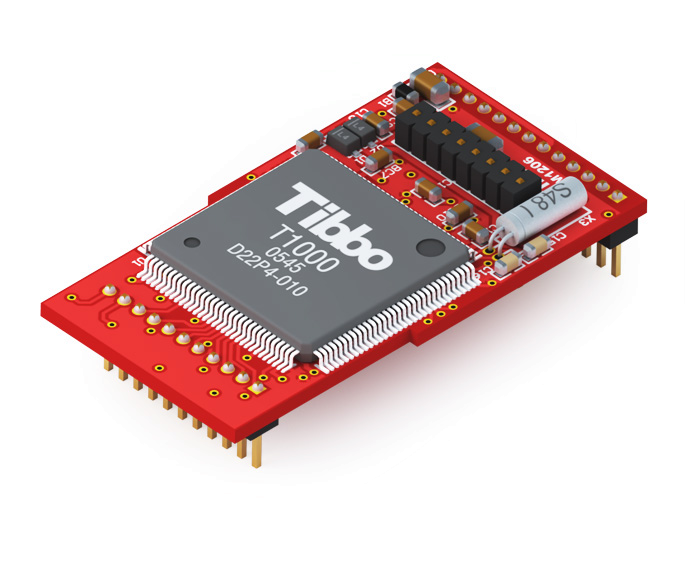
EM1206 4
high speed
17 X X 230mA
3,3V
X X X - 32,2
18,1
5,5


Content

Development Boards / Kits

to come...


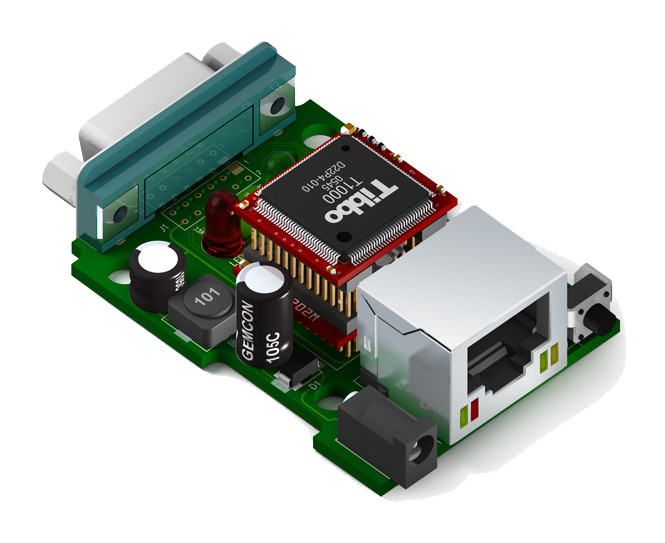
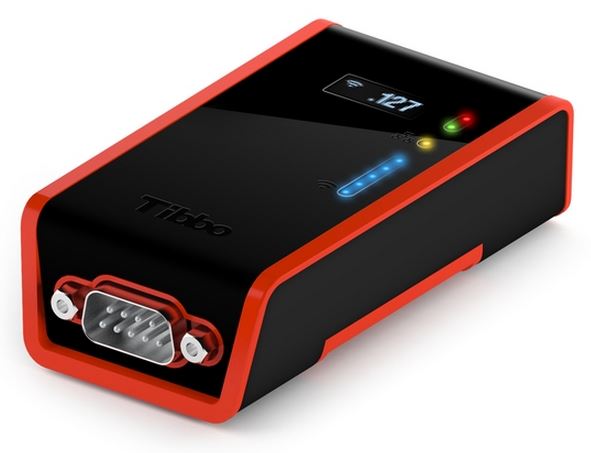
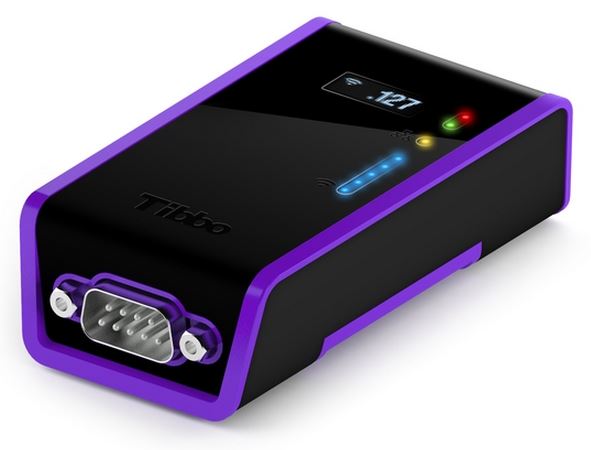
Programmable Ethernet Controller / Device Server


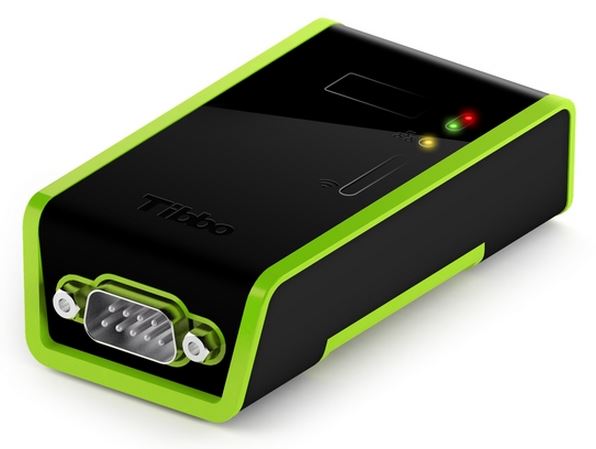
DS110

DS1101

DS1102
P/N
Serial Port Power on DB9 Wi-Fi OLED display PoE Buzzer
DS1100 RS232 IN - - optional -
DS1101 3,5 channel RS232 IN & OUT optional optional optional X
DS1102 3.channel
RS232 / RS422 / RS485
- optional optional optional X

   
Content

Linux CPU

SP7021

Conceived by Sunplus Technology in collaboration with Tibbo Technology, PLUS1 takes all the sophisticated elements typically found in modern industrial-grade embedded Linux chips, adds a plethora of features targeting IoT and industrial control applications, and delivers the resulting design in a simple microcontroller-like package that needs few external components, simplifies the schematic diagram, and reduces the PCB complexity.
Picture Features Models RAM Links
  • Easy-to-use LQFP package
  • Quad-core 1GHz Cortex-A7 CPU, plus A926 and 8051 cores
  • Single 3.3V power*
  • Integrated 128MB or 512MB DDR3 DRAM
  • Eight 8-bit 5V-tolerant IO ports, plus one high-current port.
  • Flexible Peripheral Multiplexing (PinMux)
  • Dual PinMuxable Ethernet MACs
  • Four PinMuxable Enhanced UARTs, plus one console UART
  • Industrial operating temperature range: -40C ~ +85C
  • Low EMI simplifies certification
  • Modern, Yocto-based Linux distribution
  • 10-year supply guarantee
  • And much more...
SP7021-IS 128MB
Datasheet(Internet)


Presentation


Press-Release


SP7021
SP7021-IF 512MB

Technical Data:
Item Value
CPU Cortex-A7 Quad-core 1GHz
2nd CPU ARM926 real-time core
3nd CPU 8051 low-power core
RAM 128MB (SP7021-IS) or 512MB (SP7021-IF) DDR3 DRAM
ROM external (SPI NAND, SPI NOR, eMMC, BCH ECC)
Power supply Single 3.3V power
Package LQFP-176 20x20mm (body)
Temp. -40°C to 85°C
Interfaces 2x PinMuxable Ethernet MACs
4x PinMuxable UARTs with 128-byte TX and RX FIFOs
4x PinMuxable SPI ports with 8-byte TX and RX FIFOsx CAN
4x PinMuxable I2C ports with 32-byte TX and RX FIFOsx UART
Ports/peripherals Flash interface (eMMC, SPI NAND, SPI NOR)
PinMuxable SD2.0 interface
PinMuxable SDIO (SD2.0) I/F for connecting a Wi-Fi/BT module
Two OTG USB2.0 ports with Linux boot, USB video class support
Two PinMuxable 4-channel PWM modules
Four PinMuxable timers/counters
Four PinMuxable capture modules
OS support Yocto project LINUX
Content

Tibbo BASIC

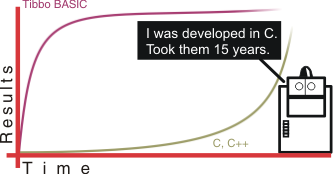
Not all languages are created equal. Some, like C or C++, are powerful tools meant for serious development work. But there is also a downside: it often takes quite a while just "to get something working".
Tibbo BASIC is the very opposite of this. For a myriad of common tasks, your time to results will be extremely short. Run our free Tibbo IDE software, start the project, add a dozen lines of code, and you get something working already. Instant coding gratification.
Hence, Tibbo BASIC is especially suitable for automation, data collection, system integration and other fields where projects are simple and must be finished quickly.


Pure language
Many language implementations, especially on the PC, mix the language itself with input/output which is specific to the hardware. For example, a "print" statement normally puts text on the screen. Tibbo BASIC is pure in a sense that the language is fully separate from any and all I/O, which is platform-specific. You learn the language once, and then just switch between different platforms.

Event-driven Operation

Tibbo BASIC applications are meant to be asynchronous and event-driven. Whenever something interesting happens, like an incoming TCP connection request, the system generates an event, and your Tibbo BASIC program can respond to it.

Platforms and objects
Each platform is a set of objects defined to describe the capabilities of a particular Tibbo device. So, instead of "print" we have "lcd.print", which is a print method defined for the lcd object.
Objects encapsulate large, sophisticated chunks of functionality, which simplifies your code and shortens your development time.

Optimized for the Embedded World
Unlike its desktop counterparts, Tibbo BASIC is economical where it matters most — memory use. Your embedded system can’t afford to waste any resources, so Tibbo BASIC lets you define your variables precisely, using bytes, words, dwords, etc. In this regard, Tibbo BASIC is rather like C!
Content

Objects

The Building Blocks
So, we keep telling you we have these "building blocks", and how modular everything is. Now let's get down to the nitty-gritty and see what exact building blocks, or objects, we have.

   Sock (Sockets): Socket communications — up to sixteen simultaneous UDP, TCP, and HTTP sessions.
  Ser (Serial Ports): Up to four serial ports. Each port can work in UART, Wiegand, or clock/data modes.
  Ppp (Point-to-Point Protocol): Accesses the Internet over a serial modem (GPRS, etc.).
  Ssi (Serial Syschronous Interface): Up to four serial synchronous interface channels (for SPI, I2C, etc.).
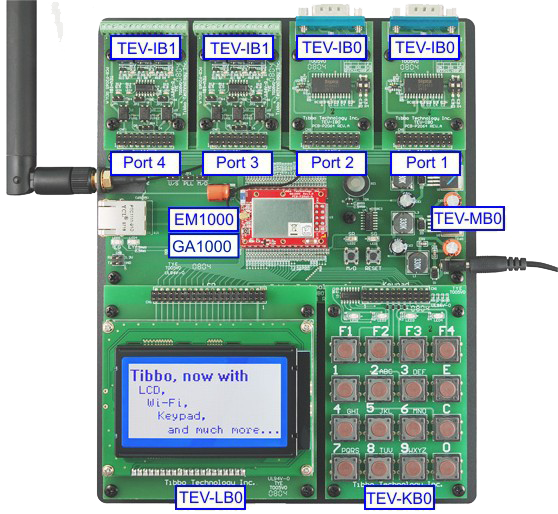
  Wln (Wi-Fi): Handles Wi-Fi interface (requires GA1000 add-on module).
  Net (Ethernet Port): Controls Ethernet port. Defines the device's IP address, gateway, netmask, etc.
  Pppoe (PPPoE): Accesses the Internet over an ADSL modem. Works in conjunction with PPPOE library.
  Io (Input/Output): Handles general-purpose I/O lines, ports, and interrupts of the device.
  Rtc (Real-time Clock): Keeps track of date and time. Automatically accounts for leap years.
  Fd (Flash Disk): Manages flash memory file system, as well as direct access to sectors of the flash IC.
  Stor (EEPROM): Provides access to the EEPROM. This memory type is ideal for operational parameters storage.
  Romfile (Resources): Facilitates access to resource files (fixed data). Use these files to store tables, lists, etc.
 Sys (System): In charge of core system functions, such as the system timer, reboots, PLL control, etc.
  Lcd (Display): Controls graphical display panels (several display types supported).
  Kp (Keypad): Works with matrix keypads and binary-type keypads. Up to 64 keys can be connected.
  Pat (LED Patterns): "Plays" patterns on up to five independent pairs of green and red LEDs.
  Beep (Buzzer Control): Generates buzzer (beeper) patterns. Output frequency programmable too.
  Button (System Button): Monitors a special system (MD) button.
Content

Free Libraries


STG (Settings) Library
Offers a persistent, convenient storage for device settings. All you have to do is list all desired settings in a descriptor file included in your project. Your code will be able to store and retrieve setting values by name.

DHCP Library
Implements a DHCP client on both Ethernet and Wi-Fi interfaces. Event-based, non-blocking -- quietly runs in the background and takes a minimal amount of CPU time.

PPPOE Library
Implements PPPoE, LCP, and all other protocols required for dialing ADSL modems and establishing an Internet connection in one simple function call.

WLN (Wi-Fi Association) Library
Implements WPA1-PSK and WPA2-PSK security, provides persistent association with a wireless access point; facilitates roaming between access points.

SOCK Library
Automates socket number assignment. Your code can get an unused socket, use it, then release it into a pool of free sockets.

FILENUM Library
Automates file number assignment. Your code can get an unused file number, work with the file "on" this number, then release the file number into a pool of free file numbers.

Content

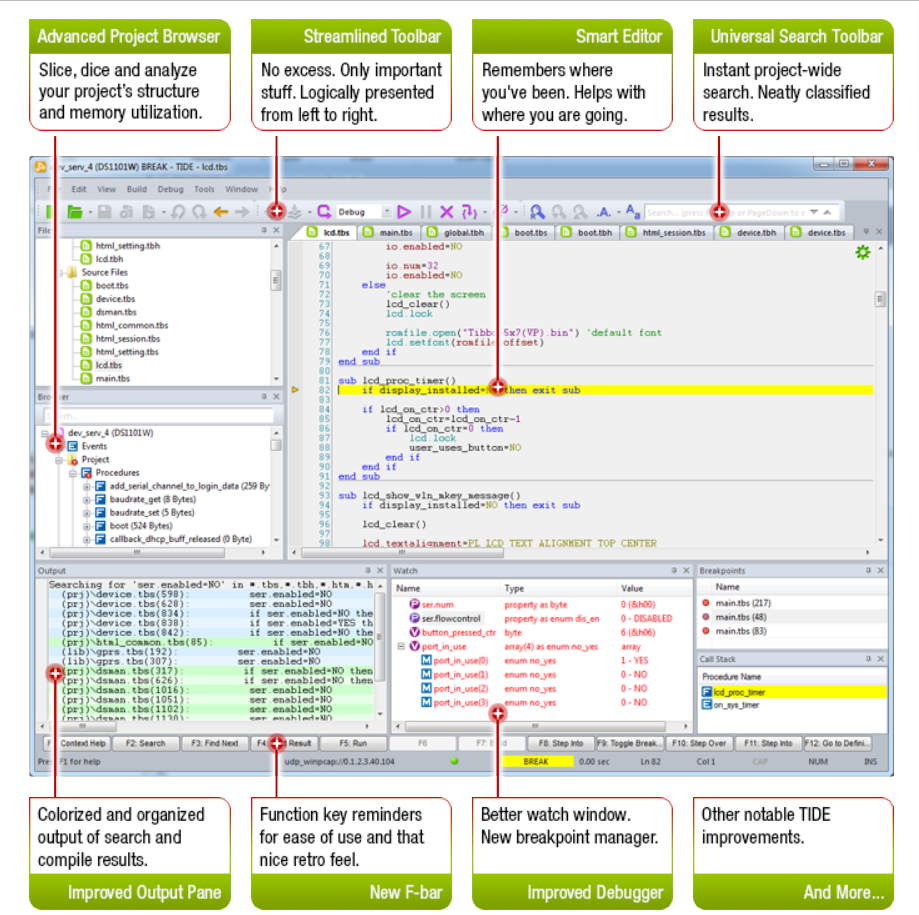
Tibbo Integrated Development Environment TIDE

Other editors may keep gaining weight and visual clutter with every release, but the new Tibbo IDE 3 stays light, agile, and pleasing to the eye — all while packing a ton of new features. Good things don't need a gig of drive space. Enjoy the right kind of lean!


Don't study TIDE. Explore it.

Tibbo IDE was designed for "learning by exploring". Its features are in plain sight. No need to memorize obscure CTRL+SHIFT+ALT sequences. Just look around and try stuff. Here is a cool example. Many windows inside TIDE have related configuration options.
And how do you know there are options to play with?
By noticing a gear icon in the top right window corner! 


  F5 to compile, upload, and run

It literally takes one key — F5 — to compile your Tibbo BASIC project, upload it onto the target, and run it with full debugging capabilities.
Creating easy-to-use, no-hassle products is in our DNA.

Debug without any debugging hardware

Set breakpoints, watch variables, inspect the stack, step through your code... Tibbo IDE provides all the tools for convenient debugging...
..And yet, our debugger does not rely on any special hardware such as an ICE machine or a JTAG board.
Simply connect your programmable Tibbo device to the Ethernet LAN, select it in the Device Explorer, and you are all set!


Content